FREE Standard Shipping on Orders Over $75

Racks and Accessories to Organize, Store, and Display Your Boards & Gear

Tuesday, March 27, 2012

StoreYourBoard.com Ski and Snowboard Storage Rack Sale


StoreYourBoard Ski and Snowboard Sale
Snowboard Storage Rack
 
 22% Off
 
Buy Now 
 
 
Garage Ski Rack
12% Off
Buy Now


Snowboard Rack
   
 
33% Off 
 

Buy Now
 
Check out these Great Deals or the many other Ski and Snowboard Racks StoreYourBoard.com has to offer.  If you don't ski or snowboard go ahead and use the coupon below on anything site wide includingbike racks, surf racks, SUP racks, and many more.
 
10% Off StoreYourBoard: CODE = Snow 


Saturday, March 17, 2012

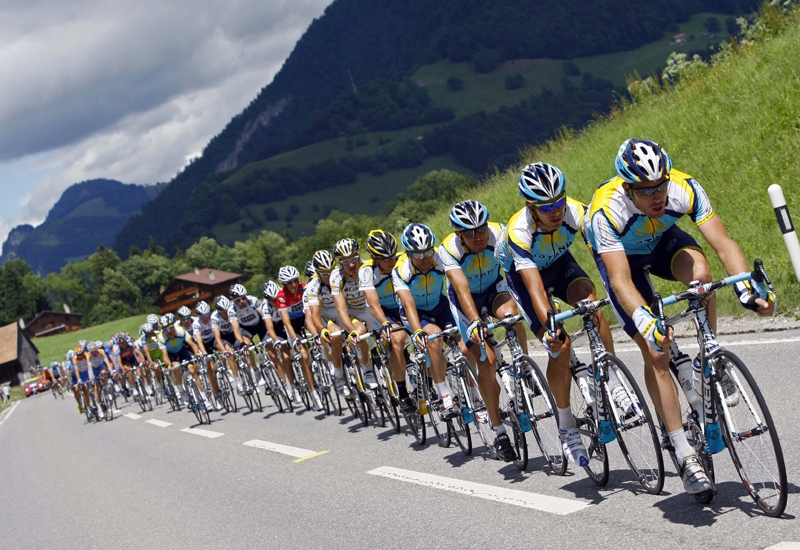
Road Bike vs. Mountain Bike: Which to Choose as Your First Bike?

Which to Buy? 

It is a question that I have pondered and a question that always seems to come up when one of my buddies gets into cycling; should I get a road bike or a mountain bike.  Cycling is a great sport in and of itself and it is also a really good cross training activity for many sports.  Quality bikes are not cheap and getting one will required a nice chunk of change.  If money is not a problem the BEST answer is get BOTH!  In then end that happens to many cyclists once they really get the bug and it goes from a mere exercise to a burning passion.


However, if you need to pick one to start here a few things to consider:
  1. What do you want to get out of biking? Are you planning on getting into cycling to explore new things, exercise, ride with friends, or something else?  Consider the real reason you are buying a bike and it should lend itself to one or the other.  For example if the exercise aspect is the most important I would recommend a road bike.  One great thing about a road bike is that you can typically just go out your front door and find a road to ride.  
  2. What do you friends and family currently ride? Cycling is a great social sport, it is often more fun to ride with a group or buddy.  If you friends and family have a mountain bike it is probably a good indication you are going to want a mountain bike as well. 
  3. Where do you live? For your first bike you want something you can get a lot of use out of.  If you live in an area with a lot of trails nearby a mountain bike might be a good fit.  If you live in an area without great trail access a road bike is most likely your best bet.  Keep in mind that if you don't live within biking distance of the trails for your mountain bike you are going to need to transport your bike with some sort of bike car rack.
  4. Amount of time available?  Similar to factoring where you live, factoring in how much time you have to devote to your bike important as well.  If you want to spend a lot of time both are great options and there are many exciting trips you could go over with your bike. If you are limited in time, you are going to want something you can hop on and take out for a spin close to your house.
  5. What does the local bike shop stock the most?  Your local bike shop is going to stock whatever style is most popular in your area.  If they have a lot of mountain bikes in the showroom, you know that it is very popular near you and a good chance there are some great trails to ride.  Another great resource is the people in the bike shop, both employees and customers.  They are going to know of the local events and rides and have a good sense of the local biking scene.


Both a road bike and a mountain bike are great fun so you practically can't go wrong either way.  Enjoy your first bike!  Once you buy your first bike remember StoreYourBoard.com and check out our bike storage racks so you have somewhere to store your bike when you aren't out riding.  As you and your family accumulate more bikes, a bike rack becomes essential.  


What do you suggest? Leave a comment with your thoughts


Tuesday, March 6, 2012

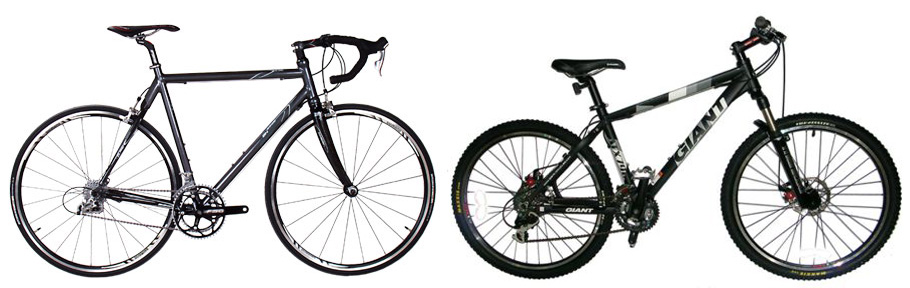
Road Bike vs. Mountain Bike: What are the Differences?


Road Bike vs Mountain Bike


What really makes a road bike a road bike and a mountain bike a mountain bike?  If you are thinking about getting into the sport of cycling and buying a bike you should understand the strengths and weaknesses of each bike.  I will be expanding on this topic in an upcoming post about why to choose a road bike or a mountain bike as your first bike.  Before I get into that I think it is important to learn what makes each bike unique.  This is brief summary where I try to hit some of the basics.  If you want to know more I would suggest you make a trip to your local bike shop.  At the bike shop you will also be able to see the differences in the bikes up close and personal. 

I will also note that the road bike and the mountain bike are two common types of bikes, there are many other kinds of bikes for more specialty usage such as BMX bikes and Triathlon bikes.  There is also a very popular mix of bike that I would refer to as a Hybrid bike.  As the name implies it takes some from the road bike and some from the mountain bike to make a more versatile bike.  If you are out for a leisurely rides this might be the place to start.


Listed below are some key differences  between Road Bike and Mountain Bikes:

  1. Intended Use - Here is the obvious one - Road Bikes are meant for riding on a hard paved surface and mountain bikes are designed for much more rough terrain such as dirt, gravel, and any combination of surfaces.  Either can be ridden on anything but they are not ideally suited.  In general a mountain bike is more versatile because it can be ridden on the road, where as a road bike really can't be ridden in rough terrain (main limitation being it very thin tires).  Although a mountain bike can be ridden on the road, once you ride a road bike on the road you will NOT want to be riding a mountain bike on the road, it feels like you are pedaling a tank down the road compared to a sleek road bike.
  2. Tires - Mountain bikes typically have fatter tires with very nubby tread.  This is to give more traction when you are in the dirt, gravel, and sand.  The wider fatter tires also keep the bike on the surface as opposed to sinking in quickly (think of sand).  Road bikes have very thin tires with a smooth surface.  This is to give the least amount of resistance when you are riding on the road.  Road bike tires are often inflated to very high pressures as well to reduce the rolling resistance.  Think of a race car vs. a monster truck tires.  The race car has "racing slicks" meant for high speeds on dry paved surfaces.  The Monster truck has huge tires with thick treads so it can go anywhere.  Road bikes are built for speed on the road and mountain bikes are built to take you off road through variable conditions.
  3. Rider Position / Geometry - Cycling enthusiasts could go on and on about this topic and all the subtleties but I will try to keep it simple.  Basically a road bike is made to have the rider in an aerodynamic position to reduce the wind resistance and once again increase speed on roads.  To do this the rider is typically meant to be stretched out further over the handlebars and the handle bars themselves have "drops" which go down under the horizontal bar to make the rider even more aerodynamic.  A mountain bike is usually setup to have a more upright position so the rider can better navigate rough terrain.  For many the mountain bike's upright position is much more natural than the bent over aerodynamic road bike position.  There are many different geometries out there for both bikes.  As you get more toward racing bikes the geometries get more "severe" but if you are just getting your first bike you probably won't need a racing bike just yet.
  4. Frame / Shocks - The bike frames on a mountain bike and a road bike are quite different.  Mountain bikes typically have a "beefier" (larger diameter tubing) build to withstand the pounding of off road terrain.  Road bikes on the other hand try to be sleek and aerodynamic.   Another big difference is the shocks/suspension that is typically present on a mountain bike and absent on road bikes.  These shocks are similar to those is your car.  They are used to dampen out the bumps and smooth the ride.  Since a road bike it meant to be ridden on a smooth paved surface there is no need for a a suspension system.  A suspension system would also be detrimental to the power transfer in a road bike.  Road bikes are typically very "stiff" so all the energy you put in through the pedals in transfer into the wheels and propels you ahead.  In a mountain bike, since you are on rough terrain the suspension makes the ride much smoother.
  5. Weight - With both bikes, as you get more high performance bikes they are lighter.  Often time this is accomplished with lighter materials such as carbon fiber.  In general though a road bike will be lighter than a mountain bike.  Reducing weight once again helps with trying to go faster on the road.  As mentioned above, a mountain bike often has a larger frame and heavier components adding to its overall weight.
  6. Components - Components are the different parts of the bike attached to the frame.  These include things like the brakes, shifters, gearing, etc.  All of these are different from road to mountain bike.
    1. Brakes - Typical road bikes have brake calipers that use brake pads on either side of the wheel.  Mountain bikes often time use disk brakes, similar to a car.  In general the disk brakes have more stopping power and stop quicker which is very important on off road terrain.  Road bikes are not really meant to brake quicky so they use a style that is slightly less efficient but lighter.
    2. Handle Bars - Road bikes have "curl" handle bars with a horizontal piece and then the drops that curl down.  These handle bars make a lot of riding positions possible.  Getting in the drops increases your aerodynamic position.  Mountain bike will typically have a wider horizontal handle bar that makes for easier maneuverability in tight spots. 
    3. Gearing - The gears on a bike are what make it comfortable/possible for you to pedal on varying hills and flats.  If you are climbing up a steep hill you want to go to an "easy" gear so you can still pedal although the bike is not moving very fast.  When you are going downhill you want a "harder" gear so you can keep your speed up and pedal without having to spin your legs at 200rpm.  Typically a mountain bike will have more of the "easy" gears that will enable you to ride of very steep grades while as a road bike might not have as "easy" of gear but will have a much larger set of "harder" gears to take advantage of your speed.  Even within road bikes and mountain bikes the gearing will vary widely.  Talk to your bike shop professional about what is best for you.
    4. Shifters -  In order to change those gears you need to have shifters on the handle bars.  On a mountain bike they are typically either a lever or turn style integrated into the horizontal handle bars.  On a road bike the shifters are out in front of the bars and have long  vertical handles so they can be used from multiple positions.  These shifters are also the same levers used to activate the brakes.  Typically you pull back for braking and push the lever to the left or right to shift gears.  On a mountain bike the brake are a separate horizontal lever that activates the brakes.
These are just some of the differences between road bike and mountain bikes.  Hopefully it gives you better insight into why you would use/choose a road bike or a mountain bike.  If you are in the market for a new bike, after you buy your new bike head on over to StoreYourBoard and pickup a bike storage rack for your garage or basement.


Sunday, January 29, 2012

Snowbird Tips, Tricks, & Little Known Facts

Snowbird......one of my favorites!  I was just there for a last minute powder ski trip, which as you can see from the pictures below, was pretty spectacular.  During the time I was there it snowed over 50".  When it wasn't snowing it was Bluebird, and the glory of the Wasatch was shining bright.


The Tram

If you are a serious skier or snowboarded and you haven't been to Snowbird you are clearly missing out.  It has some of the best snow in the country if not the world and the terrain is awesome, especially once you learn your way around.  The Snowbird Tram is classic and typically the best way to ride the mountain on a powder day.  Nothing like getting 3000ft of vertical on every run!

Looking into Little Cloud/Regulator Johnson


Tips, Tricks, & Little Known Facts
  1. Stay at one of the lodges in Snowbird Village, NOT down in Salt Lake City or over in Park City.  Snowbird is known for its snow and its abundance.  To get to Snowbird you have to drive up Little Cottonwood Canyon.  Because the road is at the base of the canyon it is susceptible to avalanche danger from each side.  The road often closes, so to ensure your best chance at Powder - stay up at the mountain.  Plus who doesn't love a nice swim overlooking the slopes your were just shredding:
The Lodge at Snowbird


2. Go When it Snows.  Snowbird is relatively easy to access out of Salt Lake City, do the last minute booking when you see the storms on their way.  You will be treated to some of the best powder skiing around:


3. Avalanche Danger is the Real Deal Out Here.  With steep slopes and large amount of slopes, avalanche danger is a very real thing.  Make sure to err on the side of caution and DO NOT go into closed areas, there could be fatal consequences.   When I was there during the one night the danger was so high they wouldn't let you leave your lodge and go outside.

4. Snowpack is a Big Deal - Being from the East Coast, I am not a savvy powder hound just yet.  I do however know that the snowpack changes from storm to storm, season to season.  The condition of the snowpack determines how safe it is to ski and snowboard and how much of the mountain will be open.  This year the snowfall total has been way down for much of the continental US, including Snowbird, and it also is very unstable.  The little snow they have gotten has turned to icy layers followed by granular layers.  Any snow on top of this is very susceptible to avalanches (see point #3).  The little known resulting fact is that because of this in years when the snowpack is unstable many area on the mountain remained closed or delayed in opening.  When I was there, Mineral Basin (backside) was closed the entire time as was Road to Provo and Baldy. 

Untouched Mineral Basin


5. General Grits - Tucked in the back of the first floor of the tram center kicks out killer breakfast sandwiches and burritos as well as some great sandwiches (go for the Regulator Johnson).  When you walk into General Grits is looks like a general store, in the back they have the deli where they whip up some killer ski food.

Fuel Up at General Grits

6. Wake Up Early and Get to the Tram Early on Powder Days.  Getting first tram or first lift sets you up for a morning of fresh tracks if you know what you are doing.  Ski hard in the morning and then take a break later if you need.  I know it isn't always easy to get out of bed but trust me, it is well worth the reward of blower powder! 

Wake up Early and Avoid Lines like This


What are your tips from Snowbird or other hot spots? 


Sunday, January 22, 2012

The Art of the Last Minute Powder Ski Trip


This seems to be an appropriate topic, being that I am on a flight to Salt Lake City - for just the occasion, a last minute trip planned around a POWDER dump at Snowbird/Alta.    I am from the East Coast, Virginia to be specific, and there is NO snow around.  There are a few "ski areas" within a couple hours drive but once you get a taste of the fluff from Utah the "ski areas" really don't do it anymore.


Although I often talked about it and fantasized about it, this is the first true last minute, on a whim, go get some POWDER ski trip.  I am talking I book the flights and hotel the night before I got on a plane.  The obvious advantage being, you pretty much know there is going to be powder is you book the trip the night before.  The rather large disadvantage is it can be a lot to pull to in a hurry.  Here are a few tips to make it happen for you, the next time you hear you favorite mountains are about to get dumped on:

1)    Be FLEXIBLE - This is the prerequisite to everything else.  Last minute trips take a lot of flexibility to not only get out on the mountain with the Fresh Cold Smoke everywhere but also be able to leave home on a whim.  I would say single people without families have an advantage here, so use it while you can.  The other big key in flexibility is work schedule.  I am lucky enough to own my own business (www.StoreYourBoard.com) so I get a lot of control over my schedule.  
2)    Pick your PRIME Powder Spots - Where do you want to go to score the best powder?  It could really be anywhere but I would suggest you want to eye somewhere that gets a significant amount of Powder Days per year, this will increase your chances.  Terrain - if you have skied powder in the past you know it totally transforms a mountain ski experience, in my opinion it almost always makes it better but keep in mind some mountains are better suited for Powder than others.  Typically the steeper the mountain is the better - think Telluride, Snowbird, Alta, etc. There is nothing better than long powder runs but some mountains don't have quite enough pitch to maximize the powder.  Another thing to consider is accessibility, the easier and cheaper it is to get there the better.  I know flying into Denver from much of the East Coast is relatively cheap with a lot of flights.
3)    Know the Resort - Ideally you want to go somewhere you have been before.  In general you might lean toward my preference of exploring new areas on ski trips, but leave that for the planned in advanced variety.  It makes things a lot easier to quickly put together a trip if you know where to fly into, how to get to the resort, where to stay, not to mention where the Powder Stash hides.
4)    Watch the Weather/Subscribe to Alerts - Going along with point #2 and 3, once you identify your PRIME Powder Spots you need to stake them out.  Most of the bigger resorts will offer some kind of alert system that lets you know when snow is on the way so sign up for that service.
5)    Powder Fund - Everyone has heard of the rainy day fund - well if you are a serious skier you need a POWDER FUND.  Usually it isn't cheap to go on a last minute trip.  The true powder enthusiasts will be able to justify the added expense for the all but guaranteed powder.  Think of it this way, the only other way I know to pretty much guarantee Powder is to go Heli Skiing (to the tune of $10,000+ up in Canada/Alaska) or go Cat Skiing maybe more like $5000/week.
6)    JUST DO IT - Enough Said - Go Get Some!


Friday, January 6, 2012

StoreYourBoard.com Customer Photos

Hey Everyone!  Just thought I would share a few new photos of how our customers are using their racks.  I love seeing how the racks are used and where people put their racks.  I have seen a bunch in action but everyone seems to use them a bit differently.


Take a picture of your rack in action and send it over to use!


Send your pictures to info@storeyourboard.com


Wednesday, December 7, 2011

How to Save Money at Ski Resorts

With many ski resorts around the country are either open or preparing to open, so I thought now would be an appropriate time to give some tips on How to Save Money at Ski Resorts.  I know the economy is struggling but that doesn't mean you should not go skiing and snowboarding this winter.  To make the most of your dollar this year Skiing or Snowboarding here are a few tips:

  1. Buy Discount Lift Tickets BEFORE you Go - At many ski resorts there are ways to get discount lift tickets.  Often time the local ski shops might have them available or check online at sites like liftopia.com.  I know I have scored some large discounts (up to $30 off!) buying tickets in advance.
  2. Bring Your Lunch - If you are looking to enjoy the skiing but save some cash, a great tip is to bring your own lunch or food along for the day.  Anyone who has been to the ski slopes know paying $15 for a burger and fries is a bit steep.
  3. Rent Skis OFF the Mountain - Meaning if you need to rent skis, look to local ski shops to rent skis or snowboards before you go.  Often times you can get great deals, better equipment, and they might even drop it off for you.
  4. Go During the Weekdays - Going during the weekdays will save you money on lift tickets at most resorts.  To me the bigger benefit of going during the weekdays is less crowds meaning more skiing and the chance to score major un-tracked POWDER!
  5. Avoid the "Name Brands" - Yes the big ski resorts that do all the advertising (i.e. Vail) are often very nice but because they are very upscale and have large marketing budgets this is reflected in their lift ticket prices.  2011-2012 Vail Peak Season Adult Lift Tickets are $105/day!  II will give Vail credit for a few of my better powder days (Cloud Seeding ?!?) and the Back Bowls are sweet - but $105/day to ski is really getting a bit steep.  For example Ski Cooper is literally right down the road from Vail and their Adult Lift Ticket is $44 /day. As you can see the difference can be huge.  Another great option for lower prices ski tickets in Colorado is A-basin (I will note this is a Vail Resort - so you do have an option that has great terrain at a lower price)
  6. Package Deals with Lodging - If you are coming into town to go skiing, it makes sense to factor in discounts on lift tickets as well.  At most ski resorts, some of the lodging is associated with the ski resort and offer package deals.  A package deal can end up saving you big on lift tickets (especially multi-day).

Use these ideas to stretch your dollar this skiing and snowboarding season.  Just make sure to get out there and enjoy the Snow!

What other tricks and tips do you have to save money and ski more?  Let us know - post a comment 


Thursday, December 1, 2011

Fretanding Ski and Snowboard Storage Racks

Introducing NEW: 


Free Standing Racks for Ski and Snowboard Storage


Customer have been asking for more freestanding racks and we have delivered in time for the holidays and the ski and snowboard season.  Our Free Standing Surfboard Rack has always been a big seller and we always hear from customers that they love it because it is just so easy to use.  Now you can get the same ease of use in ski and snowboard racks. These are ready to go out of the box and hold your skis and snowboards very securely.  They are also very easy to move around should you want to have them one place during the ski and snowboard season and them move them to someplace out of the way for off season storage.  They are also portable so you can bring them to you ski cabin so you don't have your gear all over the house!  


Check them out!


Let us know what you think of the new racks. Are there any other types of racks you have been looking for but can't find on StoreYourBoard.com?  We strive to have the best selection of board racks anywhere! 


Visit: www.StoreYourBoard.com

Monday, November 28, 2011

Top 10 Surf Gifts


If you follow the blog, you know I recently went over How to Pick the Perfect Christmas Gift.  If you still can't think of a good idea, today I am going to start offering some suggestions for different board sports and what better sport to start with than SURFING!

If you need to get a gift for the Surfer in your life here is the list you need. Any of these gift should excite a surfer but you should try to monitor what they currently have and anything they have been recently talking about to get the BEST Surfing Gift.
Stocking Stuffers:
10). Surfboard Wax - This is the practical gift for any surfer. It is small and cheap so it makes the perfect stocking stuffer.
9). Surfing DVD - Try a new release or pickup a classic. These should satisfy the surfer need even when they can't go out and ride the waves.
Larger Gifts
8). Rash Guard - Solid gift, useful yet personal. Get a new style or color if they already have one.
7). Surfboard Wall Storage Rack- It is tough to find a good place to keep and store your board when they aren't out in the ocean. Do them a favor and get them a surfboard rack to properly store their board(s) and also organize their house.
6). Bodyboard - I know these are Surfers - BUT the ocean doesn't always cooperate and produce surfable waves especially if you don't live nearby a consistent break. A bodyboard is a great way to get out in the ocean and ride the shore break or other waves that are not ideal for surfboards.
5). Surfboard Car/Truck Rack - If they are just getting into surfing or want to take their surfboards to some breaks you need to drive to a surfboard car rack is essential. There are many different types and styles, get one that fits their ride and your budget.
4). Surfboard Bag - Pretty much all surfers need a board bag. Most surfers have multiple bags. Obviously if they travel with their boards they need a board bag. Also just to store your board if it convenient to use a surfboard bag to keep the dust and dirt away and provide a little protection from dings and scrapes.
3). Wetsuit - If they don't have a wetsuit they need one PERIOD (with the small exception of some tropical islanders). Having a wetsuit makes it more comfortable to surf in many locations and also extends your season. Also if they already have one, chances are they could use a different one for different conditions. Whether it be a heavy full suit for winter surfing or a spring suit to enjoy the surfing shoulder season.
2). Surfboard - Please be cautioned - you need to know the surfer extremely well before you buy them a board. If you know what they want then make sure to get the exact boards. Surfers are particular about their boards so don't just go get a random surfboard. If you are buying a beginner board to get into surfing than talk with a surf shop and they can point you in the right direction.
1). Surfing Destination Trip - The #1 Best Gift for a Surfer is a Destination Trip. You cannot beat a surf trip down to Indo or the Gold Coast. This would be an unforgettable experience and something they might even share with you.
Good luck with your choice...all of these are good options for the true Surfer.


What was you favorite surfing gift?  Post a comment and let us know.  Help us add to the list!